
"coffee roasting history"
6000 article(s) found

The History of Italian espresso-the meaning of Italian espresso
History of Italian espresso-the most important sign of a good espresso is that it has a light camel-colored emulsion (Crema), which is a mixture of fat, water and air in the coffee during the extraction process. The emulsion should be uniform in color, about 3 cm to 5 cm thick, shake the coffee cup gently, and this layer of emulsion will stick like thick syrup

The Magic of Laos Coffee Coffee History
Coffee in Laos has gone through a lot of development in the past 20 years. The speed of development in the past 20 years is faster than that in the past 80 years. The coffee history of Laos can be traced back to 100 years ago. At that time, France was the colonial ruler of Vietnam, Cambodia and Laos, and they began to experiment with growing various crops in these areas. Coffee was quickly found in farmers in Vietnam and Laos.

Ethiopia washed Sidamo G1 Shakiso shakisso boutique coffee beans: a brief introduction to the origin, development, history and culture
[factory introduction] Shakisso/Shakiso is located in the Guji producing area of Sidamo, in the south of Oromia, close to Sidama and Gedeo. There are many pits in this area, which were used to mine gold in the early days, so there are many potholes in this coffee growing area. This makes people dangerous when walking between coffee growing areas. Xia Qi Soze

A brief introduction to the Origin, Development, History and Culture of Fine Coffee beans in Yinshan Manor
Some small estates also grow Blue Mountain Coffee, such as Wallenford Estate, Silver Hill Estate and Atlanta Estate in J.Martinez. Even the largest landowners in the area are small-scale plantations by international standards, many of which are small lands.

A detailed explanation of the three coffee waves in the history of boutique coffee
The first coffee wave: in the 1930s and 1940s, the US military took coffee as a necessity around the world to prevent combat fatigue, and the bitterness of coffee was known by the public as a pick-me-up. Then the invention and rise of instant coffee. The second Coffee Wave: after World War II, the Italian method of steam pressure extraction of espresso began to be familiar and accepted.

The History of Coffee utensils pressing Pot
Know the utensils-the French kettle, or call it the tea maker-French Press. As early as 30 years ago, Alfred Peet, founder of PeetPeets Coffee Tea, a famous roaster in the Berkeley district of the West Coast of the United States, made every effort to promote this convenient, fast and effective way of brewing. Pitt believes that only by using French pressure can we show the depth perfectly.

A brief introduction to the history and culture of the origin and development of crisp Sidamo G3-flavored coffee beans
The "Guji producing area" is located in the southeast of the Gedeo area where Jega produces snow caffeine, in the wilderness of 2100 meters above sea level, but it is higher than that of the Yega producing area, with the highest elevation of more than 2600 meters, much higher than the average Sidama, and a larger area. The coffee produced by Guji is very rich and unrestrained in flavor, which can challenge the recently favorite SOE (Single Origin) of Yega Chevy.

Industry Information | History of Peet's Coffee & Tea
With the characteristics of freshly roasted, high-quality raw beans, deep roasting and so on, Alfred Peet has become the godfather of American boutique coffee (the godmother is Erna Knutsen). Before him, no one had extended the concept of boutique coffee to the whole country on this scale. Within 10 kilometers of the editor, there are two Peets in Philadelphia. As a so-called boutique cafe, this rule

A brief History of our Coffee drinking Chinese Coffee Market
If you jump out of the framework of making coffee and look at China's coffee retail market from a big market point of view.

A brief introduction to the Origin, Development, History and Culture of Fine Coffee beans in Yinshan Manor
Location: central American area: 11100 square kilometers population: 2826000 people official language: English Coffee planting area: 9000 hectares Coffee yield: 27,000 bags of Coffee varieties: Arabica Coffee characteristics: the myth of the coffee world. Its flavor is mild, clean, soft, fruity and sour, and can meet people's various needs. Besides, it's delicious and juicy.

What you don't know about coffee Yunnan Coffee Chinese Coffee Development History
Professional coffee knowledge exchange more coffee bean information Please follow the coffee workshop (Wechat official account cafe_style) Coffee is imported in China, but do you know that coffee is also imported to Europe and America, and the real name of coffee is not coffee? In Ethiopia, there is a province called Kafa province, which produces a kind of plant fruit, which is mellow, sweet, fruity and sour.
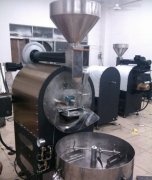
The fourth part of the history of coffee-the commercialization of coffee
For many coffee lovers, the period from the mid-19th century to the end of the 20th century was the dark age of coffee. In this day and age, coffee has lost the mysterious charm of the Middle East, become commercialized, and frankly become ordinary. When coffee was first introduced to England in the 17th century, it was enjoyed by all sectors of society. But the rich will enjoy it in their social clubs.

How coffee beans grow-an introduction to the history of coffee basics
Coffee is grown in 60 or 70 countries in the world, mainly in Asia, Africa and Central and South America. Sweet Home's main product is sweet and warm my heart coffee beans come from these high-quality producing areas. Famous coffee growers such as Brazil, Colombia, Indonesia and so on. Brazil is the world's largest coffee producer, accounting for 1/3 of the world's total output.

History of Yemeni coffee Yemeni coffee beans Yemeni coffee producing areas
First, the history of Yemeni coffee (1) the origin of mocha coffee is in Yemen, the origin of mocha coffee is very wide, these coffees have their own characteristics and differences from quality to taste, but because these coffees have been shipped and exported from the port of Mocha in Yemen to markets around the world, they are collectively called mocha coffee. The port of Mocha is located in the Red Sea north of the Mande Strait.

History of Coffee Development in China-when was coffee introduced into China
History of Coffee Development in China-when coffee was introduced to China during the Gulf War in 1991, people worried about the war affecting the supply of daily necessities, rushed to supermarkets to buy coffee and sugar. The French do not drink coffee hurriedly and leave, but taste it slowly, taste it carefully, read books and newspapers, talk about it, and drink it for most of the day. The French have formed this habit of drinking coffee

Jamaica CLYDESDALE Klitz Manor Coffee introduces the recommended roasting degree of Jamaican coffee
For more information on coffee beans, please follow the history and situation of Jamaican coffee in the coffee workshop (Wechat official account cafe_style). The history of Jamaica and coffee can be traced back to the early 18th century. In 1717, King Louis XV of France ordered coffee to be grown in Jamaica and Governor Nicholas in the mid-twentieth century. Sir Lloyd (Nichol

The history of Costa Rican coffee only grows Arabica coffee beans? Traditional coffee extraction method
IPura Vida! This is the tourism motto and national slogan of Costa Rica, translated as enjoying life. Anyone who has been there will tell you that there is no better way to enjoy life than to enjoy a cup of freshly roasted Costa Rican coffee between the country's dense jungle and charming beaches. Costa Rica is located in Central America (between Panama and Nicaragua), climate

The Development of Coffee cultivation in Laos Coffee History in Laos
Coffee in Laos has gone through a lot of development in the past 20 years. The speed of development in the past 20 years is faster than that in the past 80 years. The coffee history of Laos can be traced back to 100 years ago. At that time, France was the colonial ruler of Vietnam, Cambodia and Laos, and they began to experiment with growing various crops in these areas. Coffee was quickly found in farmers in Vietnam and Laos.

How should cooked coffee beans be stored? History of Guatemalan Coffee Development Flavor of washed bourbon Coffee beans
Guatemalan coffee has always been an important part of Qianjie coffee. Since the beginning of Qianjie, there have been 14 kinds of Guatemalan coffee. Different producing areas have different flavors and very similar flavor characteristics. Some time ago, in front of the street coffee activities, I believe you saved a lot of coffee beans, right? Worried about not having enough to drink? You can buy some more after reading this article. Today

History of Coffee Development in Foreign countries Coffee cultivation in Laos
Coffee in Laos has gone through a lot of development in the past 20 years. The speed of development in the past 20 years is faster than that in the past 80 years. The coffee history of Laos can be traced back to 100 years ago. At that time, France was the colonial ruler of Vietnam, Cambodia and Laos, and they began to experiment with growing various crops in these areas. Coffee was quickly found in farmers in Vietnam and Laos.